I don’t know what I was expecting when I arrived at Barnes
and Noble last Tuesday. Balloons, maybe? A block-long window display of Toni
Morrison: a photograph in profile with her silver dreadlocks flowing and the red lipstick
she wore on the recent cover of The New York Times Magazine. Yes, that is what I expected.
 |
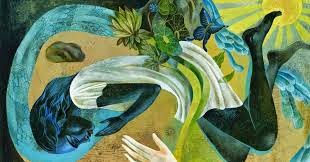
| Illustration by Eva S. |
Instead I saw nothing.
I looked around the bookstore, at times distracted by other novels, wondering if such
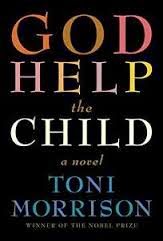
an intense search would be necessary when Harper Lee’s new book comes out. Afraid that I had gotten the release date of God Help the Child wrong, I asked someone for help and was directed to a slim stack of
books without one standing up to alert the browser to the presence of the
others. I know that the sale of hardcover books is down and it would have been easier (and cheaper) to download the book on my Kindle, but this is a book I wanted to own. I love that when Chloe sees a picture of Toni Morrison, she says "Look, there's Chloe." These books are part of her inheritance.
Unfortunately, being the Nobel and Pulitzer prize winning author of eleven novels doesn't guarantee prime real estate in Barnes and Noble. Neither does being the subject of a New York Times Magazine cover or a New York Times Book Review front page review by artist Kara Walker.
 |
| Olaf Hayjek |
Nevertheless, God Help the Child, was the most pleasurable reading experience that I have had in a while. Many people believe that Toni Morrison's books are "too much work" but reading with a pencil in hand is part of the thrill. I read this book when I should have been sleeping, when I was traveling to work on the train, during homeroom- and in 48 hours I was done.
I will not reveal too much of the plot, but I will say that God Help the Child is NOT simply about a light-skinned woman and the mental damage that she causes her dark-skinned daughter, nor is it about racism. As Booker states, "Scientifically, there's no such thing as race . . . so racism without race is a choice. Taught, of course, by those who need it, but still a choice. Folks who practice it would be nothing without it."
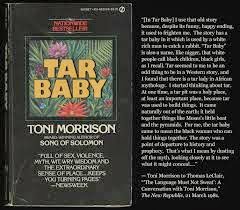
As other reviewers have written, God Help the Child, seems to reference many of Toni Morrison's earlier works. Reading it is like meeting old friends who are familiar, yet not exactly as you remember them. Bride reminds me of the dark-skinned woman that Jadine encounters in Tar Baby who threatens her entire perception of beauty. Rain is Amy Denver from Beloved in another form. Brooklyn is as infuriating and one-dimensional as Maureen Peale in The Bluest Eye. And Booker is reminiscent of Son from Tar Baby in that they are both beautiful, eloquent runners.
I will not reveal too much of the plot, but I will say that God Help the Child is NOT simply about a light-skinned woman and the mental damage that she causes her dark-skinned daughter, nor is it about racism. As Booker states, "Scientifically, there's no such thing as race . . . so racism without race is a choice. Taught, of course, by those who need it, but still a choice. Folks who practice it would be nothing without it."
As other reviewers have written, God Help the Child, seems to reference many of Toni Morrison's earlier works. Reading it is like meeting old friends who are familiar, yet not exactly as you remember them. Bride reminds me of the dark-skinned woman that Jadine encounters in Tar Baby who threatens her entire perception of beauty. Rain is Amy Denver from Beloved in another form. Brooklyn is as infuriating and one-dimensional as Maureen Peale in The Bluest Eye. And Booker is reminiscent of Son from Tar Baby in that they are both beautiful, eloquent runners.
Reading books by Toni Morrison books often leaves me with more questions than answers. After reading God Help the Child, I am left wondering if Booker is even black, and why Bride's body begins to revert back to its pre-puberty state after her break-up? What is Morrison saying about black women "having it all" in the modern world? Is the ending ultimately optimistic or pessimistic? Does Toni Morrison write white characters badly on purpose? These type of questions stay with me long after I have finished reading Morrison's books and motivate me to read them again and again. Right now, I am about to pass God Help the Child to my father because he wants to read it. Good thing I bought the hardcover.
If you liked God Help the Child, here are other books you will probably enjoy as well.

Tar Baby and Sula by Toni Morrison
This is How You Lose Her by Junot Diaz
The Blacker the Berry by Wallace Thurman